
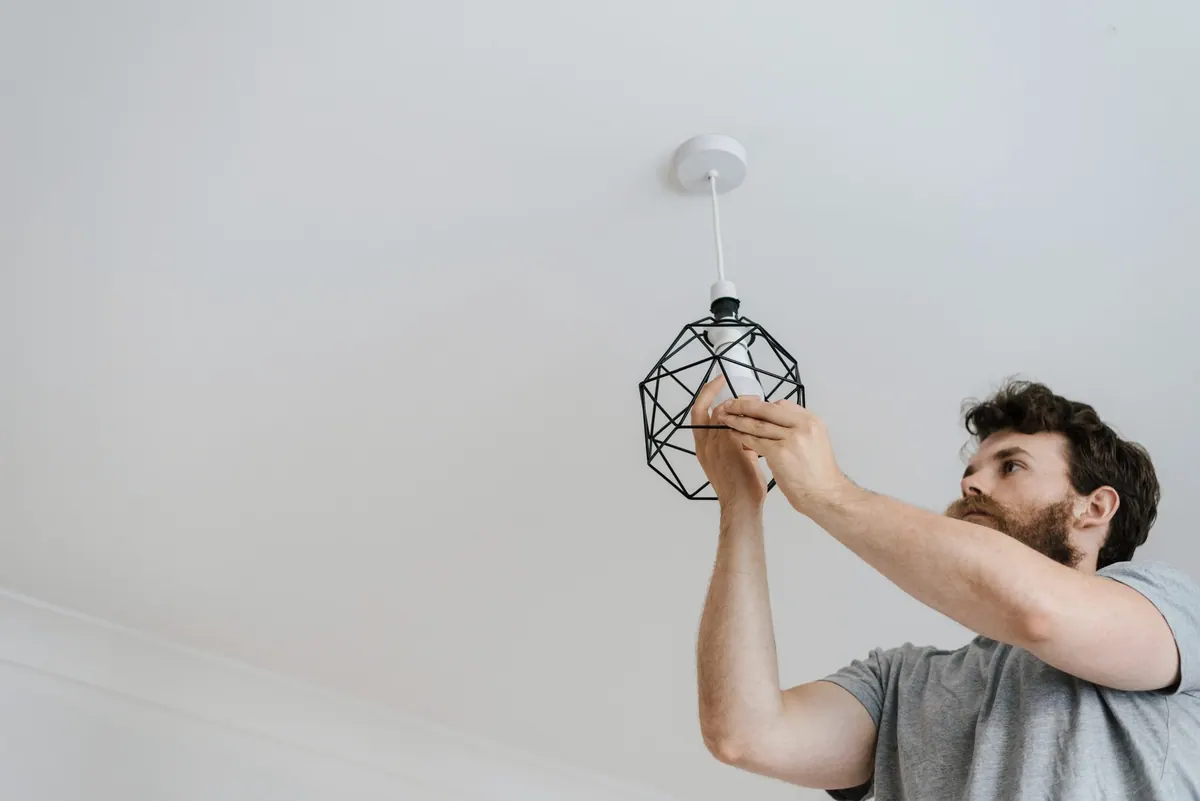
Fans and Fixture Installation
Ceiling fans braced to a joist, not to the drywall. We do this across Monmouth and Ocean County from Ocean Township. Call and we come look before we write the scope.
- 5.0 on Google
- Licensed #13VH09886800
- Phone answered 24/7
Fans and Fixture Installation, on one written scope.
Ceiling fans braced to a joist, not to the drywall.
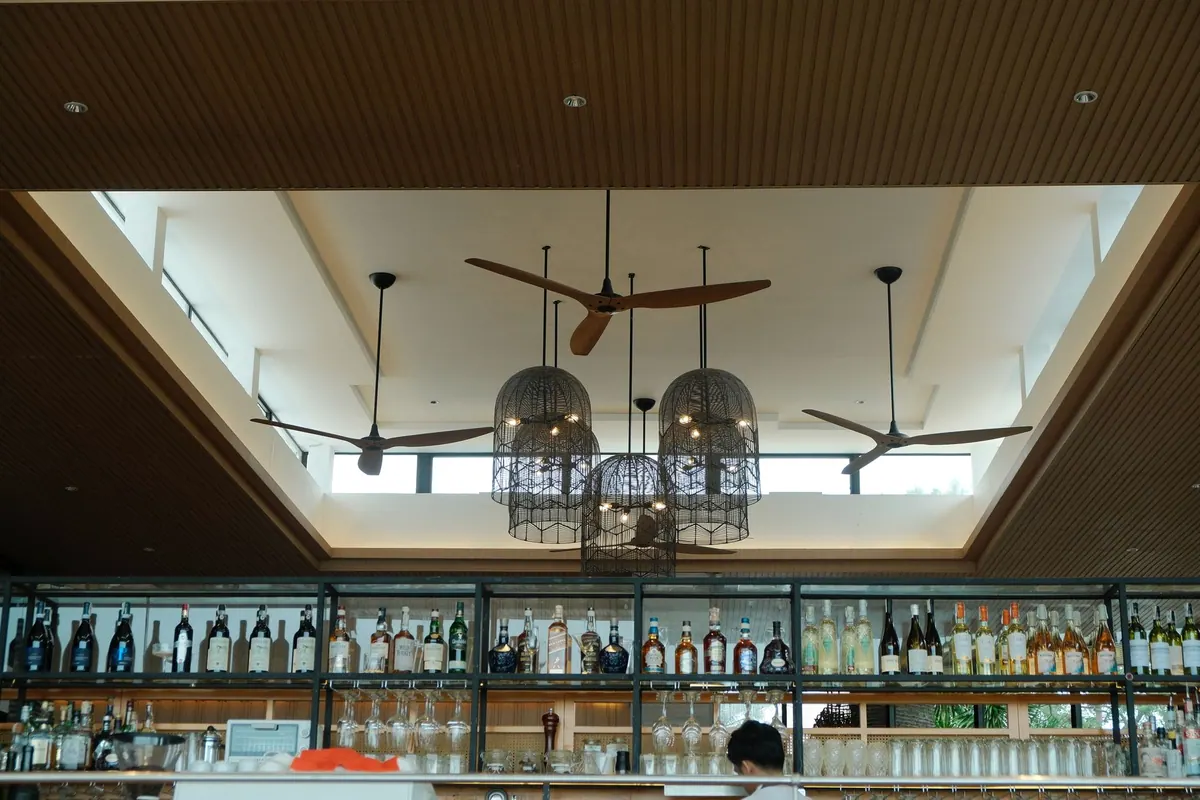
What’s included on a fans and fixture installation visit.
We inspect the cause, check what else it touched, and leave a written scope with materials and timing. The visit is free and there is no obligation to book the work.
What to know before the visit.
Have ready
Clear the floor under the fixture and take down anything breakable from shelves and tables, since a fan or fixture swap drops screws and dust. Have the new fan or light on site with its instructions and hardware bag. If the ceiling is sloped or very high, mention it, because that changes the downrod and how the tech gets up there. The tech first finds the framing above, then checks which way the joists and any brace bar run, then tests the existing switch leg to see what control the wiring can actually support.
- Fan-rated box
- Balance
- Light kit
- Old fixture haul-away
The visit
A ceiling fan gets a fan-rated brace into the joist, not the plastic box that held a light globe. We balance the blades and set the downrod for the ceiling height you have, including a sloped ceiling in a cape.
The failure is a fan that wobbles because the box is nailed to a lath strip. It will loosen. We open it and brace it, or we do not hang the fan.
Permit
Swapping a light fixture or hanging a fan on a box that is already there normally needs no permit in New Jersey. That is a device change, and a permit is normally not required. Cutting a new box into a ceiling, running a new switch leg, or adding a circuit is electrical work that gets filed and inspected through the local construction office. If the ceiling has to be opened to brace for a heavy fixture, that is the point where the scope changes.
On the Shore
Humidity is what kills fixtures at the Shore, not the fixture. Damp attic air and salt carried on the wind pit the finish on a fan housing and rust the downrod, blade irons, and screws long before the motor quits. Fans on a porch or in a garage see it worst. Damp-rated or wet-rated housings, stainless hardware, and a ceiling box that keeps the splice dry inside the canopy do better than a builder-grade unit with a thin painted finish.
When we leave
The fan runs through every speed, forward and reverse, with the tech watching for wobble and listening at the mount. Blades get checked for balance, and the canopy and downrod screws are snugged again after the first run. A light kit gets cycled with its dimmer or remote, and the wall control is tested from the doorway. The tech shows you the remote pairing, the reverse switch, and how the blades come off for cleaning before leaving.
Built with
The usual parts are a fan-rated box or an expandable brace bar anchored to framing, the fan itself with a downrod matched to the ceiling height, and a canopy that seats on a slope. Heavy fixtures need a box rated for the weight. Connections use wire nuts in the canopy and, where the switch leg allows it, a wall control. Stainless or coated screws go in for exterior and porch use. Old fixtures are taken down and hauled out.
Can you hang a fan where a light is now?
If a joist is within reach of a brace bar, yes. If the box is in the middle of a bay with no way to brace, we say so before the fan is unboxed.
What about a heavy chandelier?
Same rule: the box has to be rated for the weight. A pancake box is for a smoke detector, not a dining-room fixture.
Do you install on a sloped ceiling?
With the right canopy and downrod. A flat canopy on a slope leaves a gap you can see from the stairs.
Will you haul the old fixture?
Yes.
The fan lights work, the fan does not.
Usually the switch leg or the capacitor in the fan. We test both before we replace the whole unit.
Do you add a wall control?
If the wiring at the switch allows it. A remote is the fallback when the wall is a single switch leg with no neutral.
Can a fan go on a vaulted ceiling?
Yes, with a downrod and a canopy that matches the slope angle. A flat canopy on a slope leaves an open gap you can see from the stairs. We set the drop so the blades clear the wall and stay above head height.
Why does my fan hum on low speed?
Low-speed hum is usually an incompatible speed control or a fan that is not rated for the dimmer style feeding it. We check the control against the fan, and if the motor itself is noisy at every speed, we say so before you replace anything.
Do I need a special box for a heavier fixture?
Yes. A pancake box or a plastic nail-on box is rated for a light globe and nothing more. A heavy fixture needs a box rated for the weight and anchored to framing, and we will not hang it otherwise.
Can you reuse the existing switch for the fan?
If the cable at the switch has the conductors the control needs. A single switch leg with no neutral limits you to a pull chain or a remote. We look at the box before we recommend a wall control.
Other electrical jobs we handle
Appliance Installation
Dishwashers, disposals, and laundry hookups set level and tested before we leave.
Light Switches
Switches, dimmers, and the three-way that was wired backward.
Doorbell Installation and Repairs
Wired and plug-in chimes, including the transformer that died.
Flood Lights
Exterior lights aimed so they light the yard, not the neighbor's bedroom.
Tell us what is wrong. We will tell you what it takes.
(732) 333-7800- Call24 hours a day, 7 days a week
- Shop7 Brook Dr, Ocean Township, NJ 07712
- EmailInfo@wedoitallhandyman.com
- EstimateFree on-site look. Written scope before work starts.
Licensed & insured · NJ HIC # 13VH09886800
Free on-site look · No obligation