
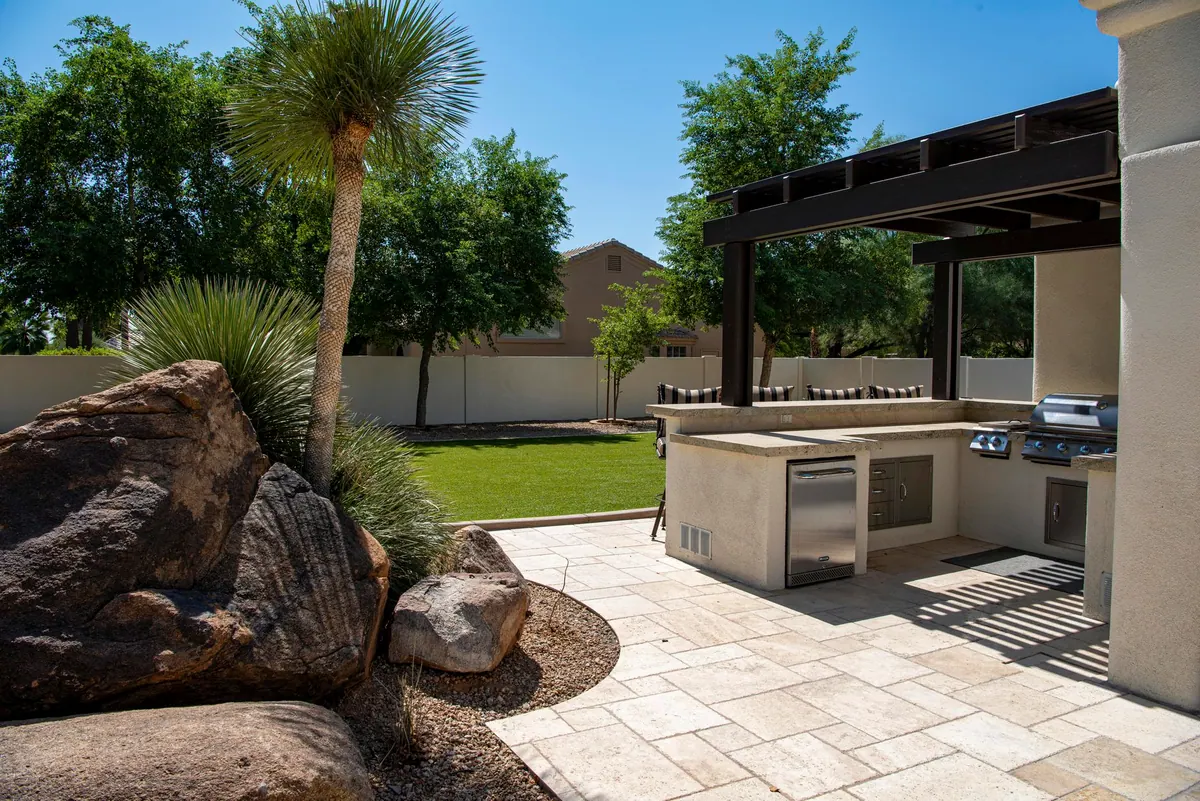
Pavers
Walks and patios pitched away from the house, on a base that will not settle by spring. We do this across Monmouth and Ocean County from Ocean Township. Call and we come look before we write the scope.
- 5.0 on Google
- Licensed #13VH09886800
- Phone answered 24/7
Pavers, on one written scope.
Walks and patios pitched away from the house, on a base that will not settle by spring.
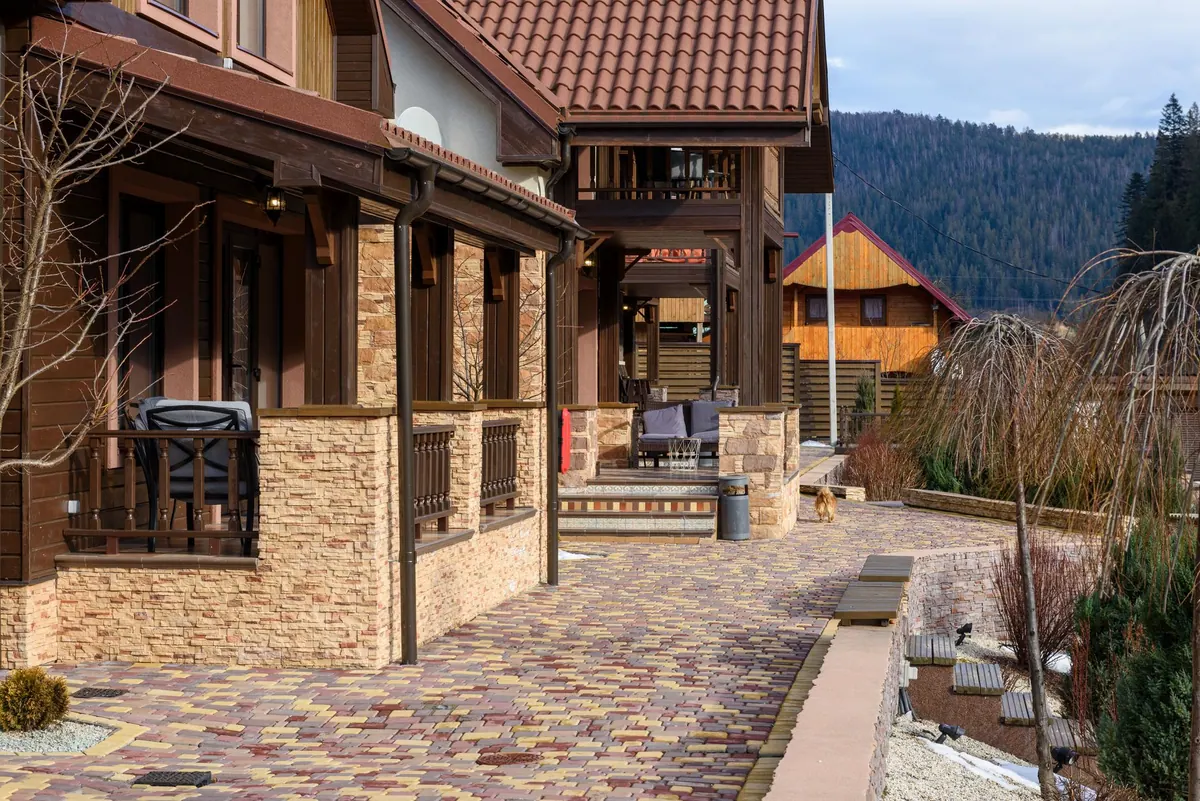
What’s included on a pavers visit.
We inspect the cause, check what else it touched, and leave a written scope with materials and timing. The visit is free and there is no obligation to book the work.
What to know before the visit.
Have ready
Clear the area of furniture, planters, and anything sitting on the old surface, and mark sprinkler heads or lighting you know about. Point out where the downspouts discharge and where you want water to end up. The technician checks three things first: the pitch of the existing grade away from the house, the soil under the old surface, because organic fill or clay will not compact, and the depth needed for the intended use. A footpath, a patio, and a driveway are three different base builds.
- Excavation
- Compacted base
- Edge restraint
- Polymeric sand
The visit
The base is the paver job. We excavate, compact, edge-restrain, and pitch the surface away from the house. Polymeric sand is the last step, not the thing holding the patio up.
A walk that ponds against a Brick Township foundation was laid on sand over organic soil. Resetting the same pavers on the same mud brings the pond back by spring. The soil leaves. The base goes in.
Permit
A paver patio or walk is flatwork, so there is no building permit and no inspection of the finished surface. Town interest shows up in other places. Work inside a right-of-way or an easement needs the town to agree to it. Where lot coverage is capped, an impervious surface count can apply, and a raised patio with tall steps may be treated as a structure. Those are settled before a shovel is used.
On the Shore
Freeze-thaw is the whole story on a paver surface. Water that gets into the joints and the base freezes, lifts the surface, and leaves a ridge you cannot compact back down. That is why the base is compacted in lifts and why the joint sand matters as much as the stone. Sand and cement bedding over a compacted aggregate base with a concrete edge restraint resists that movement. Rock salt is hard on concrete pavers and stone, so sand or a salt-safe product is a better winter choice.
When we leave
When the work is finished the technician checks that water runs away from the house and that no low spot holds a puddle. The joints are filled and compacted, the polymeric sand is set per the product instructions, and the surface is misted and left to cure. Furniture goes back after the sand sets, and if a sealer was used, after the sealer cures. The care note is to keep the surface dry for the first day and not to wash it hard while the joints are still setting.
Built with
The materials are concrete or clay pavers, a compacted crushed aggregate base, sand and cement or a coarse bedding sand, a concrete or spiked edge restraint, and polymeric joint sand. The base aggregate and the restraint carry the structural load, and the pavers are only the wear surface. Polymeric sand locks the joints and slows weeds, but it supports nothing. Where a contrasting border is wanted, it goes down before the field so the cut pavers along the edge come out even.
How thick is the base?
Enough for the use — a footpath is not a driveway. We compact in lifts, not one loose dump.
Do you seal pavers?
After they are clean and dry, if you want the color to hold. Sealer on efflorescence locks the haze in.
Can you add a border in a different color?
Yes. The border is set first so the field cuts are even.
What about a tree root under the walk?
We show you. A root that will lift the walk again gets a different route or a joint you can live with. Paving over a live root is a one-year patio.
Steps in pavers?
Each step needs a restrained edge and a solid base. Loose paver steps walk apart.
When can we put furniture on it?
After the sand is set and, if we sealed, after the sealer cures. We leave that in writing.
Do you remove the old patio or lay over it?
Laying over an old surface is not offered, because the base is where the failure is. The old material comes out so the subgrade can be checked and compacted. Reusing sound pavers is possible when they come up clean and the color is still available.
Will weeds come back through the joints?
Polymeric sand and a tight joint pattern cut them down a lot, but nothing stops them completely. The joint sand is topped up as it settles, and that is what keeps the surface stable. A base with organic soil left in it is what grows the worst weeds.
How do you handle water that pools near the house?
The finished surface is pitched away from the foundation, and the low spot is corrected in the base rather than by adding sand on top. If the yard grade is higher than the house, a swale or a drain is discussed, because a patio alone cannot fix that.
Can the pavers be sealed right away?
No. They need to be clean and dry, and any efflorescence has to be gone first. Sealer over a hazy or damp surface locks the haze in. Sealing is optional and is scheduled after the joints have set and the surface has dried.
Other masonry jobs we handle
Concrete Installation and Repair
Pads, walks, and the trip edge at the garage.
Brick and Block Repair
Spalling brick, cracked block, and the joints that freeze open.
Concrete Slabs and Walks
Pads, walkways, and steps poured on a proper base and pitched away from the house.
Steps, Stoops, and Chimney Repair
Rocking steps, cracked stoops, and chimney crowns that wash water into the flue.
Tell us what is wrong. We will tell you what it takes.
(732) 333-7800- Call24 hours a day, 7 days a week
- Shop7 Brook Dr, Ocean Township, NJ 07712
- EmailInfo@wedoitallhandyman.com
- EstimateFree on-site look. Written scope before work starts.
Licensed & insured · NJ HIC # 13VH09886800
Free on-site look · No obligation